





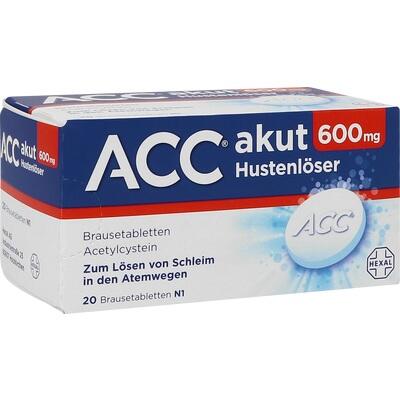
ACC akut 600 Brausetabletten
£12.28*
£18.01* You save £5.73| Packing Size: |
 20 St
20 St
|
|---|---|
| Dosage Form: |
 Brausetabletten
|
| PZN: |
 00010808
|
| Manufacturer: |
 Hexal AG
|
| properties.row.pdf-link: | properties.row.pdf-download |
In Stock
Prices incl. VAT plus shipping costs
- Respiratory tract infections, such as: - Cough with mucus production - Bronchitis with mucus production
Application InfoGeneral dosage recommendation: Alternatively: Drinking plenty of fluids throughout the day will improve the expectorant effect of the medication. Patients with bronchial asthma must be closely monitored during therapy.
Application NotesThe total dose should not be exceeded without consulting a doctor or pharmacist. How to use? Dissolve or allow the medicine to disintegrate in water (e.g., a glass) and drink. How long should it be used? Do not use this medicine for more than 4-5 days without medical advice. If symptoms persist or recur regularly, consult your doctor. Overdose? An overdose can cause heartburn, stomach pain, nausea, vomiting, and diarrhea, among other symptoms. If you suspect an overdose, contact a doctor immediately. Missed a dose? Continue taking the medicine as prescribed at the next scheduled time (do not double the dose). General advice: Pay particular attention to accurate dosing, especially for infants, young children, and the elderly. If in doubt, ask your doctor or pharmacist about any potential effects or precautions. A doctor's prescribed dosage may differ from the information in the package insert. Because the doctor tailors the dosage to your individual needs, you should use the medicine according to their instructions.
DosageAdolescents aged 14 and over and adults: 1/2 effervescent tablet; Adolescents aged 14 and over and adults: after a meal; Adolescents aged 14 and over and adults: 1 effervescent tablet; Adolescents aged 14 and over and adults: after a meal
What side effects can occur? - Gastrointestinal problems, such as: - Nausea - Vomiting - Abdominal pain - Diarrhea - Inflammation of the oral mucosa - Headache - Tinnitus (ringing in the ears) - Hypersensitivity reactions of the skin, such as: - Itching - Rash - Hives - Transient, spontaneous reddening of the skin with a sensation of heat, especially in the face (flushing) - Allergic reactions, such as: - Narrowing of the airways - Angioedema (swelling of the face, hands, and feet) - Rapid heartbeat - Low blood pressure - Fever. If you notice any discomfort or changes in your condition during treatment, contact your doctor or pharmacist. The information provided here primarily considers side effects that occur in at least one in 1,000 treated patients.
ContraindicationWhat are the contraindications? Always: - Hypersensitivity to the ingredients. Under certain circumstances - consult your doctor or pharmacist: - Ulcers in the digestive tract, including a history of ulcers - Bronchial asthma - Histamine intolerance. Which age group should be considered? - Children under 14 years: This medicine must not be used. What about pregnancy and breastfeeding? - Pregnancy: Consult your doctor. Several factors play a role in whether and how this medicine can be used during pregnancy. - Breastfeeding: Consult your doctor or pharmacist. They will assess your individual situation and advise you accordingly on whether and how you can continue breastfeeding. If this medicine has been prescribed to you despite a contraindication, talk to your doctor or pharmacist. The therapeutic benefit may outweigh the risk associated with using the medicine despite the contraindication.
Important NotesWhat should you pay attention to? - Be careful if you are allergic to acetylcysteine! - Be careful if you are allergic to ascorbic acid (vitamin C)! - Be careful if you are allergic to the sweetener saccharin (E number E 954)! - Be careful if you are allergic to the sweetener cyclamate (E number E 952)! - Be careful if you are allergic to fructose (fruit sugar). If you have to follow a diabetes diet, you should take the sugar content into account.- Be careful if you have an intolerance to lactose. If you have to follow a diabetes diet, you should take the sugar content into account. - There may be medicines that interact with them. You should therefore generally tell your doctor or pharmacist before starting treatment with a new medicine that you are already using. This also applies to medicines that you buy yourself, only use occasionally or that were used some time ago.